
For years, Bali has been one of the world’s most talked-about lifestyle and property investment destinations.
Luxury villas in Canggu. Ocean-view developments in Uluwatu. Wellness-led resorts in Berawa. Digital nomads relocating for a slower pace of life. Investors chasing strong short-term rental returns.
But behind the social media headlines and dream lifestyle marketing, there’s another side to the Bali property market that overseas buyers are starting to pay much closer attention to in 2026: regulation, compliance, zoning, and legal structure.
Following some interesting discussions recently with people actively working within the Bali market, it’s clear the island is entering a more compliance-focused phase.
And for overseas buyers, that matters.
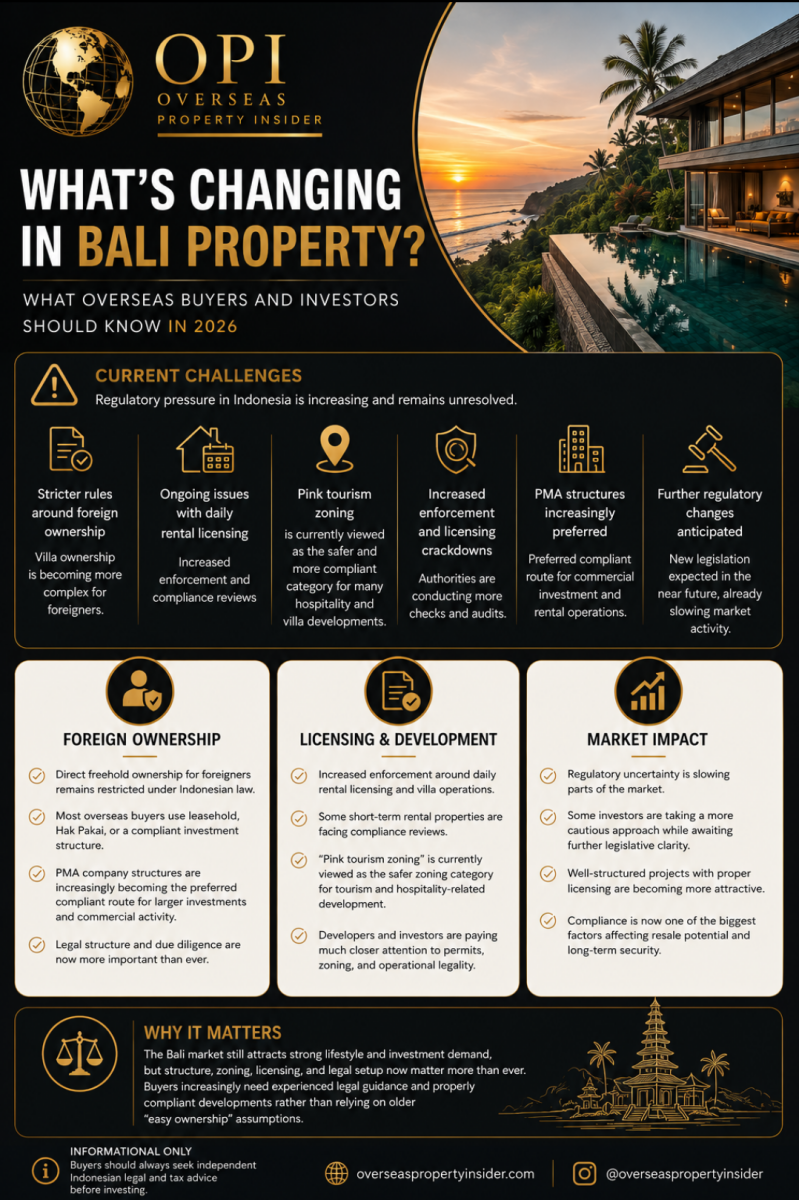
Bali Is Still Extremely Attractive — But It’s Becoming More Structured
One of the biggest misconceptions internationally is that Bali property works in the same way as buying in Europe or Dubai.
It doesn’t.
Foreigners still cannot directly own Indonesian freehold land personally under Indonesian law. That’s why many overseas buyers use:
Leasehold structures
Hak Pakai arrangements
PT PMA company structures for certain commercial investments
For years, parts of the market moved very quickly, often driven by tourism growth and investor enthusiasm. But now there’s increasing focus on whether developments and villa operations are actually compliant from a legal and operational perspective.
That includes:
Tourism zoning
Villa licensing
Daily rental permits
Land use compliance
Business operational structures
Zoning Is Becoming A Bigger Conversation
One thing that keeps coming up in Bali property conversations is zoning.
Tourism-zoned land is generally viewed as more suitable for villa rental and hospitality-style development. Buyers and developers are increasingly paying attention to whether projects are operating within the correct zoning framework rather than simply focusing on location and returns.
That shift is important because enforcement and compliance conversations are becoming more visible across parts of the island.
For investors, it means due diligence is becoming far more important than it may have been a few years ago.
The Bali Market Is Maturing
Personally, I think this is part of a wider shift happening in Bali.
The market is gradually becoming more mature, more structured, and more focused on long-term sustainability rather than rapid speculative growth.
That doesn’t mean Bali has lost its appeal, far from it.
The island still has:
Huge international visibility
Strong tourism demand
A powerful wellness and lifestyle brand
Luxury hospitality growth
Long-term remote working appeal
But buyers are increasingly looking at:
Legal security
Developer credibility
Operational compliance
Long-term resale protection
Sustainable investment structures
rather than simply chasing the fastest returns possible.
Why Overseas Buyers Need To Be Careful
One of the biggest risks in overseas property is assuming every market operates like your home country.
Bali is a very different environment legally and structurally, which is why proper legal advice and local due diligence are absolutely essential before committing to any investment.
For buyers looking seriously at Bali in 2026, understanding:
ownership structure
zoning
licensing
operational legality
rental compliance
is becoming just as important as choosing the right location.
Final Thoughts
Bali remains one of the most desirable lifestyle destinations in the world and I don’t think international interest is disappearing anytime soon.
But the market is evolving.
And in many ways, that evolution may ultimately strengthen the island’s long-term property sector by pushing more focus towards transparency, compliance, and professionally structured developments.
For overseas buyers, the opportunity is still there, but navigating it properly matters more than ever.
This article is for informational purposes only and should not be considered legal or financial advice. Buyers should always seek independent Indonesian legal and tax advice before investing overseas.
Written by Elly Herriman

Add comment
Comments