
Written by Elly Herriman
Founder and Editor of Overseas Property Insider
A managed villa in Bali can appear to offer the best of both worlds: a property you can enjoy personally and professional support when it is being used as guest accommodation.
That proposition can be attractive, particularly for overseas buyers who will not live in Bali throughout the year. However, buying into a managed development is not the same as purchasing a conventional home.
The property, ownership structure, management agreement and proposed rental model all need to be examined separately.
Here are the questions I believe every overseas buyer should ask before proceeding.
1. What Are You Actually Buying?
The first question is not whether the villa has a pool or whether the projected rental return looks attractive. It is what legal interest the buyer will receive.
Bali is part of Indonesia, and its property laws do not operate in the same way as those in the UK or many other countries.
Developments may advertise freehold, leasehold or other ownership arrangements. However, the structure legally available to a particular purchaser will depend on factors including nationality, residency status and the nature of the property.
Foreign buyers should not assume that an advertised freehold option provides the same rights that an Indonesian citizen may hold.
Ask for written confirmation of:
- The precise legal structure
- The registered landowner
- The relevant land certificate
- The length of any lease
- The lease commencement date
- Renewal rights and the method used to calculate renewal costs
- Any restrictions on resale or transfer
- What happens when the lease expires
Appoint an independent Indonesian lawyer to verify these points. The lawyer should act for you rather than for the developer, selling agent or management company.
2. What Does the Management Agreement Cover?
A managed property may be marketed as a relatively hands-off purchase, but the extent of the service can vary considerably.
Some agreements cover reservations, guest communication, cleaning, maintenance and financial reporting. Others may exclude services that buyers initially assume are included.
Request the complete management agreement before paying a non-refundable reservation fee.
Check:
- The management fee and how it is calculated
- Whether fees are charged on gross or net rental income
- Cleaning and housekeeping costs
- Maintenance and repair responsibilities
- Furniture-replacement obligations
- Marketing and booking-platform charges
- Insurance requirements
- Financial reporting arrangements
- The agreement’s duration
- Renewal and termination provisions
A professionally managed property can provide convenience, but owners still need to understand who controls the property, who approves expenditure and how income and expenses are reported.
3. How Much Personal Use Is Permitted?
If you plan to use the property yourself, confirm the owner-usage rules in writing.
Some managed developments limit personal stays during high-demand periods. Others may charge cleaning, booking or service fees whenever an owner occupies the property.
Ask:
- How many nights of personal use are permitted?
- Are peak-season dates restricted?
- How much notice must the owner provide?
- Are owner stays subject to service charges?
- Can family and friends use the property?
- Does personal use affect participation in the rental programme?
A property may be suitable as a lifestyle purchase but less suitable for an owner who expects unrestricted access throughout the year.
4. Are Rental Projections Realistic?
Projected rental yields should be treated as forecasts, not guaranteed results, unless a legally enforceable agreement explicitly states otherwise and has been independently reviewed.
Ask to see how the forecast was calculated.
Important assumptions include:
- Expected nightly rates
- Anticipated occupancy
- Seasonal variations
- Management fees
- Booking-platform commissions
- Cleaning and maintenance costs
- Taxes
- Furniture replacement
- Insurance
- Utilities
- Reserve funds
Request both gross and net projections. A headline return may look impressive before the full cost of operating the property is deducted.
If a return is described as guaranteed, establish who is providing that guarantee, how it is funded, how long it lasts and what remedies are available if payments stop.
5. What Is the Construction Position?
Buying an off-plan property introduces risks that do not exist when purchasing a completed home.
Before proceeding, buyers should obtain independent confirmation of:
- The developer’s legal entity
- Its rights over the development land
- Planning and construction permissions
- The building specification
- The construction programme
- The anticipated completion date
- The payment schedule
- Delay provisions
- Buyer protections if the development is not completed
- The inspection and handover process
Marketing images should be treated as illustrations until the finished property and specification can be inspected.
Payments should be linked to clearly defined contractual stages wherever possible. Buyers should also understand where their money will be held and what protection exists if construction is delayed or discontinued.
6. What Will Ownership Cost Each Year?
The purchase price is only one part of the financial commitment.
Depending on the development and ownership arrangement, ongoing costs may include:
- Management charges
- Service or community fees
- Property maintenance
- Pool and garden care
- Utilities
- Insurance
- Local taxes
- Accounting costs
- Legal or company-administration fees
- Furniture and appliance replacement
- Contributions to a reserve fund
Ask for an itemised estimate of annual costs and find out whether the management company can increase its fees.
Where costs are quoted in Indonesian rupiah but your income or savings are held in another currency, exchange-rate movements can also affect your overall budget.
7. How Easy Will It Be to Sell?
Exit planning should begin before you buy.
Ask whether you can sell the remaining term of the lease, whether the developer or management company must approve the purchaser, and whether resale fees or commissions apply.
If the development advertises a buyback arrangement, obtain the complete terms and have them reviewed independently. A buyback promise is only as strong as the contract and the financial capacity of the party making it.
Buyers should not assume that a future resale will be quick or profitable.
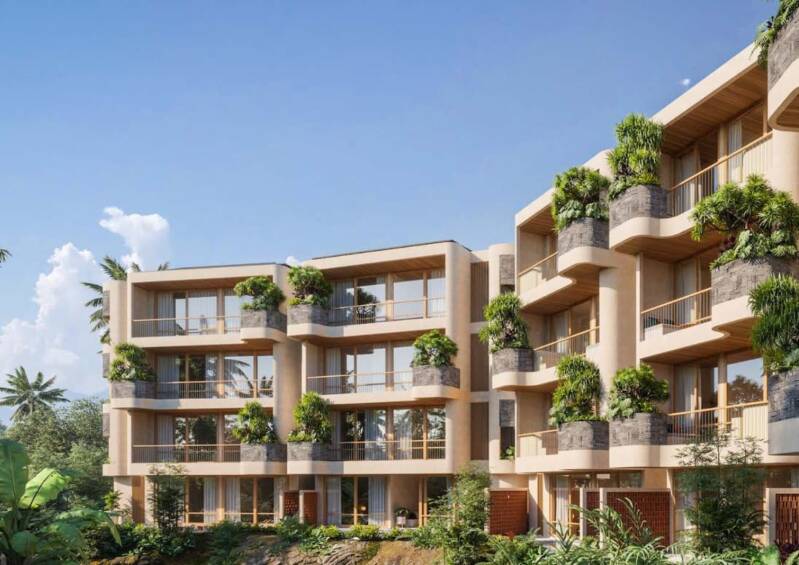
Anahita Bali as a Current Example
Anahita Wellness Resort & Spa is one example of a managed, wellness-focused property development currently being promoted in Babakan, Canggu.
According to the developer, the project is planned to include 56 one and two-bedroom residences ranging from approximately 47 to 145 square metres. Advertised options include ground-floor villas with private pools and upper-floor suites with outdoor Jacuzzis.
The developer also promotes hospitality management, sustainability features and both freehold and leasehold purchasing options.
These features may make the project worth exploring, but they do not replace independent due diligence. Buyers should verify the ownership structure, development documentation, management agreement, purchasing costs and any projected rental figures before committing.
You can view the current Anahita Bali information through International Property Alerts
https://bbr-team-guides.vercel.app/ipa-anahita-campaign/
For broader background, the International Property Alerts free guide to buying property in Bali
provides an introduction to the market and purchasing process.
Planning the Currency Transfer
Currency movements can change the sterling, euro or dollar cost of an overseas property between reservation and completion.
Before transferring a deposit or making a staged payment, ask for the exact payment currency and schedule. This will help you understand when exchange-rate movements could affect your budget.
If you would like to discuss an international property transfer, you can "contact First Class Currency through my referral link" https://affiliate.firstclasscurrency.com/fcc-opi
Affiliate disclosure: I may receive a referral fee if you use this link. This does not increase the cost of your transfer. You should compare providers, rates, fees and service terms before making a decision.
My View
A managed Bali villa can be an attractive lifestyle purchase, but professional management does not make a property risk-free or guarantee a return.
The strongest opportunities are those where the legal structure is clear, the management agreement is transparent, the total costs are understood and the buyer’s expectations are realistic.
Take time to read the contracts, question every projection and use advisers who are independent of the sale.
A beautiful villa may capture your attention. The documentation should determine whether it deserves your investment.

This article is for general information only and does not constitute legal, tax, financial or investment advice. Indonesian property rules and individual circumstances can differ. Always obtain current advice from appropriately qualified independent professionals before making a property or currency commitment.
Editor’s disclosure: I work with International Property Alerts, which is currently promoting Anahita Bali. Overseas Property Insider remains an educational editorial platform, and the checks and cautions in this article apply to Anahita and every other overseas development I cover.
Add comment
Comments