
Georgia is increasingly appearing on the radar of international property buyers, and one of the country’s most distinctive markets is Batumi, on the Black Sea coast.
Batumi is the administrative centre of the Autonomous Republic of Adjara, a region in south-west Georgia combining coastline, mountains and a humid subtropical climate. The official Adjara tourism authority describes Batumi as one of Georgia’s main tourism hubs, with a mix of historic areas, modern high-rise development, hotels, restaurants and a long seafront.
For overseas buyers, the attraction can include lifestyle, comparatively accessible entry prices, new-build apartments and a large investment-oriented property sector.
But Batumi is not a market where buyers should simply choose an apartment based on an advertised yield or sea view.
There is substantial development activity, a large proportion of investment property and increasing rental supply, making careful property selection and independent due diligence particularly important.
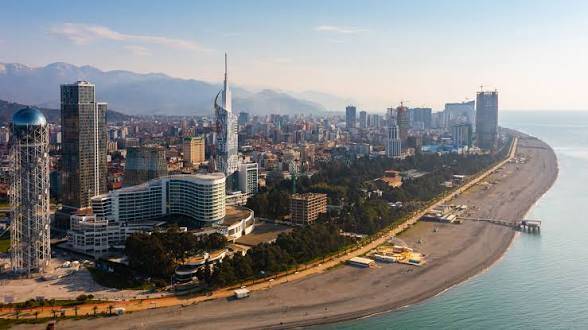
Where is Batumi?
Batumi sits directly on Georgia’s Black Sea coast and is the administrative centre of Adjara.
The wider Adjara region covers approximately 2,900 square kilometres and includes coastal destinations such as Batumi, Gonio, Kvariati, Kobuleti, Chakvi and Sarpi, as well as mountainous areas inland.
That geography gives Batumi a different character from Georgia’s capital, Tbilisi.
It is fundamentally a coastal market, with tourism playing a major role in the type of property being developed and marketed.
Can Foreigners Buy Property in Georgia?
Foreign buyers can acquire non-agricultural immovable property in Georgia.
Georgia’s State Services Development Agency specifically recognises foreign ownership of immovable property when setting out the rules for property-linked residence permits, while excluding agricultural land from that route.
Agricultural land is subject to separate legal restrictions, so buyers considering houses or plots outside standard urban developments should establish the registered classification of the land before purchasing.
For most international buyers looking at an apartment in Batumi, the relevant purchase will normally be a residential unit rather than agricultural land.
However, legal checks should still be completed independently before entering into a transaction.
Why Is Batumi Attracting Property Buyers?
Batumi combines a tourism economy with an unusually large investment-apartment market.
Research from Georgian investment bank Galt & Taggart says Batumi’s real estate demand is heavily influenced by investment purchases from foreign buyers.
Its research also distinguishes between conventional residential developments intended primarily for people living in the city and investment developments, many of which are located closer to the sea and consist of smaller apartments aimed at the rental market.
A property designed for someone who plans to live in Batumi may have very different characteristics from an apartment designed primarily for short-term tourist rentals.
Overseas buyers should therefore decide what they are actually purchasing for:
• Personal use
• Holiday use
• Long-term rental
• Short-term tourist rental
• Capital growth
• A mixture of lifestyle and investment
The answer should influence the location, property type and development you consider.

How Active Is the Batumi Property Market?
Batumi has a substantial residential property market.
According to Galt & Taggart’s 2025 full-year review and 2026 outlook, 17,478 apartments changed hands in Batumi during 2025, representing a 15% year-on-year increase.
The total residential market value was estimated at approximately US$1.3 billion for the year.
However, the same research contains an important warning for investors.
Although activity recovered during 2025, Galt & Taggart reported that unsold apartment stock remained elevated and numerous developments were still in the construction pipeline.
Its outlook for 2026 was therefore more cautious, with increasing supply expected to test how easily new apartments can be absorbed by the market.
There is genuine activity, but there is also significant supply.
Are Foreign Buyers Important in Batumi?
Yes.
Galt & Taggart’s research says foreign purchasers dominate Batumi’s investment property market.
Its developer survey estimated that roughly three quarters of apartment sales were to foreign buyers, although buyer nationality and demand can change over time.
This helps explain why Batumi developments are widely marketed internationally and why many projects are designed around investment rather than purely domestic housing demand.
For a buyer, however, it also means considering who you may eventually sell the property to.
A market dependent heavily on overseas demand can behave differently from one driven predominantly by local owner-occupiers.
What Is Happening to Batumi Property Prices?
Property prices vary considerably according to location, building type, specification and whether an apartment is sold in unfinished, finished or fully turnkey condition.
This makes broad “average Batumi price” comparisons less useful than they first appear.
Galt & Taggart reported that primary-market prices increased during 2025, while prices on the secondary market also rose.
Its 2025 review recorded average annual primary-market price growth of 9.4% and secondary-market growth of 6.9%.
That does not mean buyers should assume similar growth will continue.
The same research expects primary price growth to moderate as additional stock reaches the market.
Past price growth is not a guarantee of future performance.
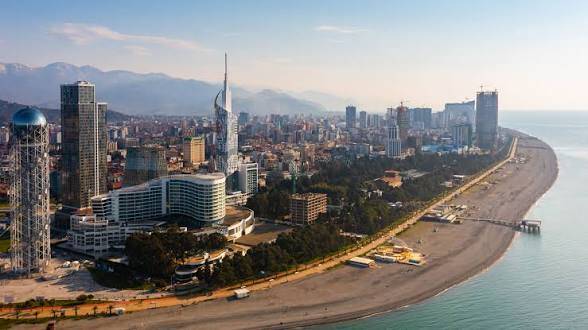
Batumi Is Not One Single Property Market
Location can make a substantial difference.
Galt & Taggart separates Batumi and the surrounding market into areas including:
• Old Batumi
• New Boulevard
• Inner areas
• Peripheral zones
• Makhinjauri
• Gonio-Kvariati
• Kobuleti
Its research shows significant differences in both transaction volumes and property prices between these locations.
Old Batumi
Old Batumi contains the historic core of the city and sits close to the waterfront, restaurants and major visitor attractions.
Property here is very different from the large-scale tower developments found elsewhere.
New Boulevard
The New Boulevard area contains a large concentration of newer apartment developments and investment-oriented property.
It has also accounted for a significant proportion of Batumi apartment transactions in recent years.
Gonio and Kvariati
South of central Batumi, Gonio and Kvariati provide more resort-style coastal locations.
These can appeal to buyers looking for beach property outside the busiest parts of the city.
Makhinjauri
Makhinjauri sits north of central Batumi and is another coastal area included within the broader Batumi property market.
The right location depends on whether you prioritise central-city access, beach proximity, rental demand, lifestyle or investment.
Buying Off-Plan Property in Batumi
Off-plan and new-build apartments form a major part of Batumi’s international property offering.
Buying earlier in a development can sometimes provide staged payment plans or lower initial pricing, but it introduces additional risks.
Before purchasing off-plan, buyers should establish:
• Who owns the development land
• Whether the developer has completed previous projects
• The construction timetable
• The contractual completion date
• What happens if construction is delayed
• Exactly what specification will be delivered
• Whether the apartment is furnished or unfurnished
• Management and service charges
• Any restrictions on resale
• The payment schedule
• The conditions surrounding any rental programme
An attractive CGI is not due diligence.
The legal position of the development and the contractual obligations of the developer matter considerably more.
Understanding Batumi Rental Returns
Rental income is one of the main reasons Batumi property is marketed internationally.
But buyers should be careful with headline yield figures.
Galt & Taggart reported an average Batumi rental yield of 7.4% in 2025, down from 8.8% in 2024.
The research links that decline partly to rising property prices while rental rates remained comparatively stable. It also expects yields to face further pressure as additional rental apartments enter the market.
This is precisely why advertised returns should not be considered in isolation.
A buyer should ask:
Is the return guaranteed or projected?
Is it gross or net?
What management fees are deducted?
Who pays utilities and maintenance?
Who replaces furniture?
How many months of the year is realistic occupancy assumed?
Are service charges included?
What happens if the management company changes?
How many competing apartments are in the same building?
The number that ultimately matters is what remains after realistic costs.

Could Increasing Supply Affect Rental Returns?
Potentially, yes.
This is one of the most important considerations for anyone looking at Batumi purely as an investment.
Galt & Taggart estimates that Batumi’s number of short-term rental apartments could double by 2029.
Its research warns that this could place downward pressure on rental yields unless tourism demand and average lengths of stay increase sufficiently to absorb that additional accommodation.
That does not mean Batumi cannot be a successful rental market.
It means buyers should be selective rather than assuming every new apartment will perform equally well.
Batumi as a Lifestyle Destination
Batumi is not only an investment market.
The official Adjara tourism authority highlights its Black Sea location, mountainous backdrop, subtropical climate, restaurants, hotels, historic centre and modern waterfront development.
The wider region also provides access to mountain destinations and other coastal resorts.
For someone looking for a second home rather than maximum rental yield, this opens up considerably more choice.
A lifestyle buyer may prefer more space, a quieter location and a lower-density development rather than a small studio in a large investment tower.
Can Property Ownership Give You Residency in Georgia?
Potentially, subject to meeting the rules.
Georgia’s State Services Development Agency currently states that a foreign national who owns qualifying immovable property in Georgia, excluding agricultural land, with a market value exceeding US$150,000 equivalent in Georgian lari, may qualify for a short-term residence permit.
The property value must be established by a certified assessor from a body accredited by Georgia’s Accreditation Centre.
The Agency also provides for qualifying spouses and children to obtain short-term residence permits under the relevant rules.
This is an important point because older articles online may still quote previous property thresholds.
Always check the current official requirements before purchasing property for residency purposes.
Property ownership should not be treated as an automatic guarantee that residency will be granted.
Currency When Buying Property in Georgia
International buyers also need to think about how they will fund the purchase.
Georgia’s official currency is the Georgian lari (GEL), although property in Batumi is frequently discussed and marketed internationally using US-dollar pricing.
The important figure for the buyer is the currency specified in the actual purchase agreement and payment schedule.
If you are funding the purchase from sterling, euros or another currency, exchange-rate movements can affect what each payment costs in your home currency.
This becomes especially relevant where an off-plan purchase involves several payments over a long construction period.
Before signing, establish:
• Which currency the contract is denominated in
• Which currency the developer accepts
• The dates and amounts of staged payments
• Bank-transfer requirements
• Any transfer or conversion charges
Currency should form part of your purchase planning rather than being left until a payment deadline.
Due Diligence Before Buying Property in Batumi
International buyers should obtain independent professional advice and verify the property rather than relying entirely on the selling agent or developer.
Checks should normally include:
• The registered owner of the property or development land
• The property's registration details
• Whether any mortgages, liens or other encumbrances are registered
• The legal classification of the property and land
• The developer's track record
• Construction and completion documentation where relevant
• Your sale and purchase agreement
• The payment schedule
• Service and maintenance charges
• Management agreements
• Rental programme terms
• Delivery specification
• Resale provisions
If a purchase is being made primarily for investment, rental forecasts deserve the same level of scrutiny as the legal documentation.
Add comment
Comments